For many young readers, the first thing they do when picking up a book isn’t checking the jacket copy or the cover art, it’s flipping to the final page. Author Ellen Oh notes that this “page-count check” is a common refrain among educators and librarians. “Every school visit I make,” Oh explains, “At some point the school librarian will sigh and mention that when offering a book to a student, the majority of them first turn to the back of the book to see how many pages it is… If the book is over 250 pages long, they put it back.”
To meet these readers where they are, there’s been a shift in publishing to putting more attention on shorter novels and picture books. This year, a “short novel” has already garnered high acclaim; Renée Watson’s ALL THE BLUES IN THE SKY recently won the Newbery Medal, clocking in at just around 200 pages.
As attention spans and reading habits of young people evolve, the rise of shorter novels and picture books represents more than just a passing trend. It can be a vital strategy for engaging readers in a fast-paced digital age.
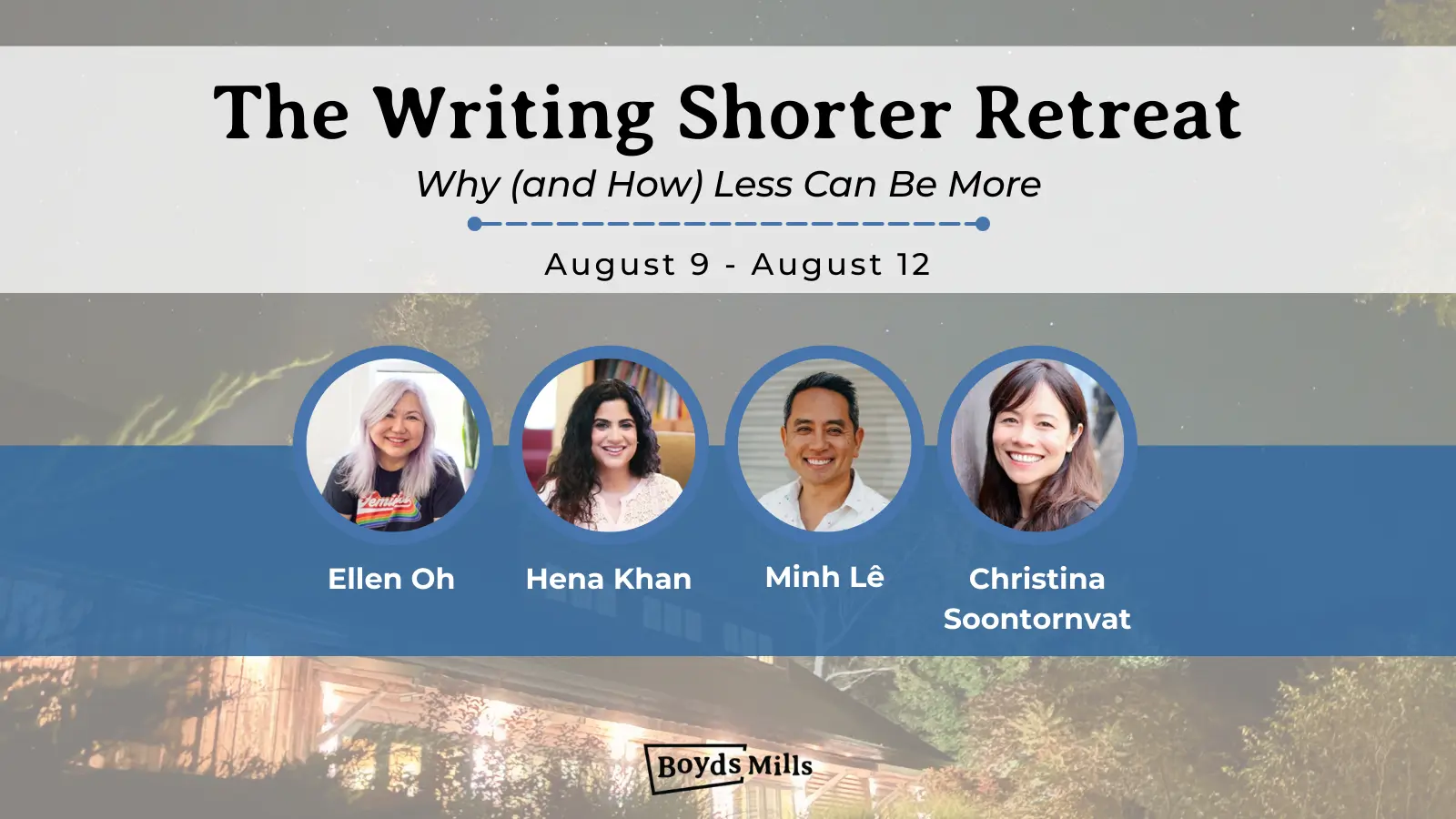
To explore this trend in depth, we recently chatted with the faculty of the Writing Shorter Retreat: Why and How Less Can Be More—Christina Soontornvat, Hena Khan, Minh Lê, and Ellen Oh. They all provided insights into the shorter novels and picture books trend, why less can be more, and how brevity can unlock magic for the reader.
Q. What is considered a short novel or picture book?
While a typical middle grade word count usually hovers around 45,000 words, there is a growing movement toward “shorter” novels and stories. For a middle-grade novel, that would be between 30,000 and 35,000 words, says author Hena Khan. A recent New York Times opinion piece also suggested the page counts for short novels tend to be less than 200 pages.
For picture books, a “shorter” story might be a wordless picture book or a picture book with a word count below 250 words, although this can depend on the audience and genre.
Q. It seems like we are hearing a lot more about shorter novels and stories in the children’s literature community. Why?
Ellen Oh: I see this as a growing phenomenon that can be blamed on the advent of social media and shortform content. I read somewhere that the brain adapts quickly to the type of content you absorb and then becomes hardwired to that content. So, now we are dealing not only with the immediate gratification of shortform content, but also how young brains are adapting to that content and becoming wired to only crave these quick bursts of entertainment.
The good news is that our brain can also adapt back to reading with enough nurturing. Short stories, short novels are the way to rewire young minds to enjoy the slower pace of reading again.
We need long fiction, but we have to get over that knee–jerk reaction many of our students have to seeing a lot of pages. Just as picture books have always been the first step to growing readers, we need more short stories and short novels to help bring back the readers who we have lost to shortform content. Short stories and short novels are easier to read in class and at night with your children. That love of reading can reignite by understanding that in order to fix the problems that short form content has created, we have to also start shorter ourselves.
Hena Khan: We’ve all heard a lot about the impact of pandemic learning loss, in addition to social media and short form videos, on literacy. Educators have expressed the need for shorter novels for all readers, but especially for reluctant readers who benefit from the reward of finishing an entire book and can find it extremely motivating.
“Just as picture books have always been the first step to growing readers, we need more short stories and short novels to help bring back the readers who we lost to shortform content.”
Q. Are shorter novels just about meeting kids’ shorter attention spans, or are there other reasons kids might be drawn to them?
HK: Other reasons include a sense of accomplishment, to be able to finish them quickly, and in the case of series, to get to the next book. But also, shorter books require tighter and more focused writing and plot lines, which can appeal to some types of readers.
Christina Soontornvat: I often find that with shorter books, whether they are picture books or full novels, contemporary or historical or fantasy, the “world-building” is extremely tight and well planned out. The writer does not need to delve into long explanations about how the world of the book is set up, but has given the right amount and selection of clues so that the reader feels instantly grounded in that world and can focus on the story and the journey of the characters.
Personally, I love high fantasy — I love a long book with maps and lore and genealogy charts at the back, but not every reader is drawn to this type of book!
Q. Why might a shorter novel or picture book be more impactful?
Minh Lê: With picture books, one of the primary sources of magic is the interplay between the words and the illustrations. Streamlining your text is a way to unlock the full potential of this magic. Fewer words can help create extra space for the reader to pour their own imagination into the book, to fill those empty spaces and make connections that aren’t spelled out in the text.
There is a time travel element to writing a book because you’re writing to an unknown reader who exists (at least) 2 years in the future. How do you create a book, which is a static object, that is still engaging to this unknown future audience? One of the most powerful tools we authors have is in deciding what we don’t write… shortening your text in a way that invites the reader lean into the book and become an active participant in the storytelling process. And this isn’t just for picture books–writers at any level can find storytelling magic in what we choose to leave unsaid.
CS: I hear teachers often talking about how they need shorter novels to read aloud in class. They are looking for stories that can wrap up in a reasonable amount of time, with chapters or breaks that are short enough to finish reading at the tail end of a class period. As a parent who read out loud to my kids at bedtime (usually when I was on the verge of falling asleep myself!), I can testify to the need for books with shorter chapters.
“Fewer words can help create extra space for the reader to pour their own imagination into the book, to fill those empty spaces and make connections that aren’t spelled out in the text.”
Short Novels & Picture Books: A Reading List
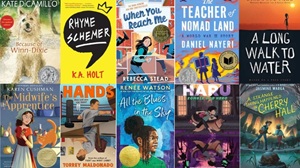
If you are looking for examples for mentor texts to explore narrative economy, our faculty recommends these standout titles. These short novels and picture books show how a lower average novel page count doesn’t mean a sacrifice in emotional depth or complex storytelling.
Shorter Novels (YA and MG)
- A Long Walk to Water by Linda Sue Park
- All The Blues in the Sky by Renee Watson
- Because of Winn-Dixie by Kate DiCamillo
- A Strange Thing Happened in Cherry Hall by Jasmine Warga
- The Midwife’s Apprentice by Karen Cushman
- Haru, Zombie Dog by Ellen Oh
- Hands by Torrey Maldonado
- When You Reach Me by Rebecca Stead
- Rhyme Schemer by K.A. Holt
- The Teacher of Nomadland by Daniel Nayeri
Sparse & Powerful Picture Books
- Our Lake by Angie Kang
- Be a King by Carole Boston Weatherford, illusrated by James E. Ransome
- Journey by Aaron Becker
- Dude! by Aaron Reynolds and Dan Santat
- Wishes by Muon Thi Van, illustrated by Victo Ngai
Want to explore writing shorter in depth?
All four of our Q&A participants will be teaching at the upcoming Writing Shorter Retreat: Why and How Less Can Be More. It is a deep dive into the craft of narrative economy, helping writers understand how many words in a short novel are truly necessary to tell a resonant story.