What are mentor texts?
Mentor texts are the best writing instructors. Most of what I learned about picture book craft came from studying mentor texts, or exemplars of the kinds of books I hoped to write. We use these books to hone our writing skills.
So, what do we do with mentor texts to hone these skills? Do we just read them?
Reading lots of mentor texts is a must. However, it’s only a first step. We must “work mentor texts,” as I like to say, if we want to get more powerful learning experiences from them. This involves asking questions, isolating sections, re-typing whole pages, making mock dummies, comparing and contrasting, and so much more. We do these things to pick up on the moves of expert authors. These techniques sometimes go unmentioned even by those same authors at writing workshops because, after a time, these methods become second nature to them. We want to understand the moves, the impact of them, and reflect on how these strategies fit (or don’t) within our own craft.
Could you share some strategies?
I’ll share one here.
As a former AP English teacher, I learned to “work mentor texts” with high school students who were trying to pass the AP exam. We would take high-scoring sample essays and apply multiple strategies. One strategy I used to use with my high schoolers is blacking out a portion of an exemplar essay and then having them write the missing part themselves. When I revealed the missing part, they could then compare it to what they wrote.
I do this with picture books slightly differently.
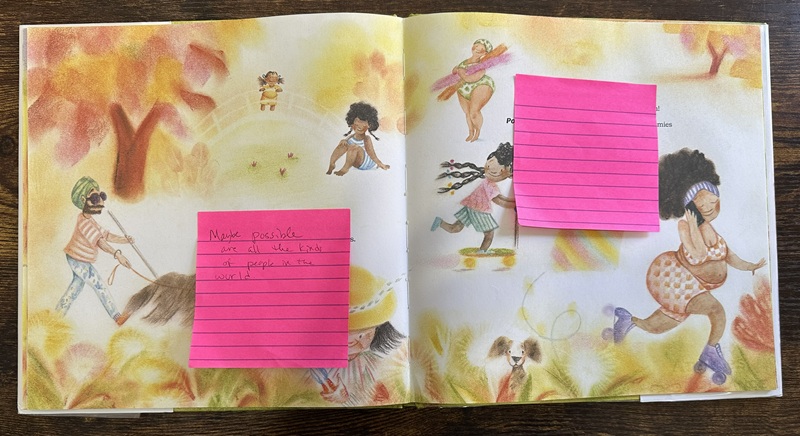
First, I pick out a book I’ve never read, preferably from an author I like. It might also be a book that’s been critically praised or is very popular. I might choose based on a skill. If a writer is going for concision, lyricism, or humor, they might choose a book from an author they know has that strength. I read the story very quickly, making sure not to stop and think too much. I don’t want to remember the language. I just need to understand story the author is trying to tell. I then pick a page and cover the text with sticky notes.
There are different things you could write on the sticky notes. For one, you could write something lengthy, describing in detail all that the images are showing and where we are in the plot. Capture all that could be said. This helps with concision because you get to see how the author focuses. You could also get creative and write another version to try your hand at one of the skills, such as lyricism. How would you tell the story of this page?
When done, remove the stickies and identify the similarities. What was critical for both of you? Additionally, identify what is different. What strategies did they use to tell the story of this page that you hadn’t thought of? What did the author choose to omit (or perhaps, what was added by the illustrator)? Are there any important elements of the spread that the author didn’t put into words? Can we guess at the illustration note the author left?
An Example
An interior spread from Francis Discovers Possible by Ashlee Latimer and illustrated Shahrzad Maydani, with sticky notes covering the text.
We’ve talked a lot about picture book mentor texts, but can you explain “mentor sets”? Is there a difference between the two?
There is a difference. A mentor set is a collection of books that are similar in some way. Typically, if you put together a mentor set, you have a clear idea of a book you want to write, and you’re looking for advice from many voices on how to write it. Just how specific the set will be varies by your needs. Possibly, you are new to writing humor, so you grab a set of funny books to learn. That’s not that specific. However, what if you want to write a funny book that involves making food? You decide to create mentor sets around funny cooking stories. That gets even more specific. Writers should approach mentor sets with one or maybe a few questions to zero in on the learning they want from the set.
Have you used mentor sets in your own writing?
Yes, all the time. Back when I was writing Your Name is a Song, I was very interested in ensuring the strong parent character makes room for the girl main character. So, I picked out multiple books that do that, including Last Stop on Market Street, Drawn Together, Yo Soy Muslim, and Alma and How She Got Her Name. I led with this question as I read each book: How was the adult making the child primary in the story?
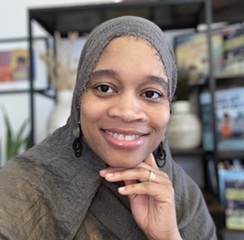
About Jamilah Thompkins-Bigelow
Jamilah Thompkins-Bigelow is an award-winning children’s book author based in Philadelphia. Before entering the literary world, she worked as an educator for more than fifteen years. This work continues to influence her stories, which center Black and Muslim protagonists.
Her children’s books are recognized by many educational institutions and reputable publications, including Ebony and NPR, and have made many “Best of” lists, including TIME Magazine’s “10 Best YA and Children’s Books” of the year and Book Riot’s “20 Best Children’s Books of All Time.” She is a two-time winner of the Muslim Bookstagram award, and she has earned the prestigious Walter, Irma Black, and Golden Kite award honors for her work.
In addition to writing, she invests her time in the mentorship of aspiring authors through We Need Diverse Books and Boyds Mills.
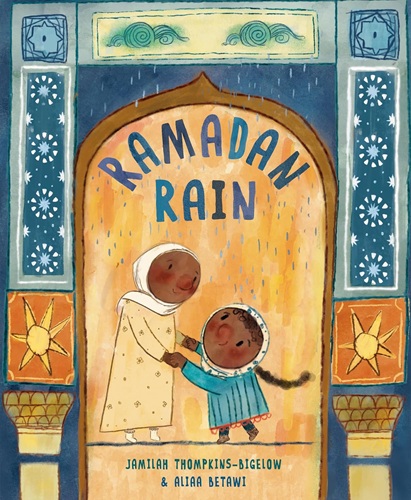
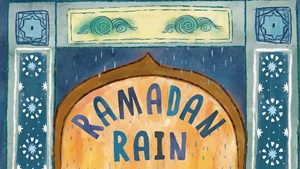
Jamilah’s newest book, Ramadan Rain, will be published on March 10, 2026.